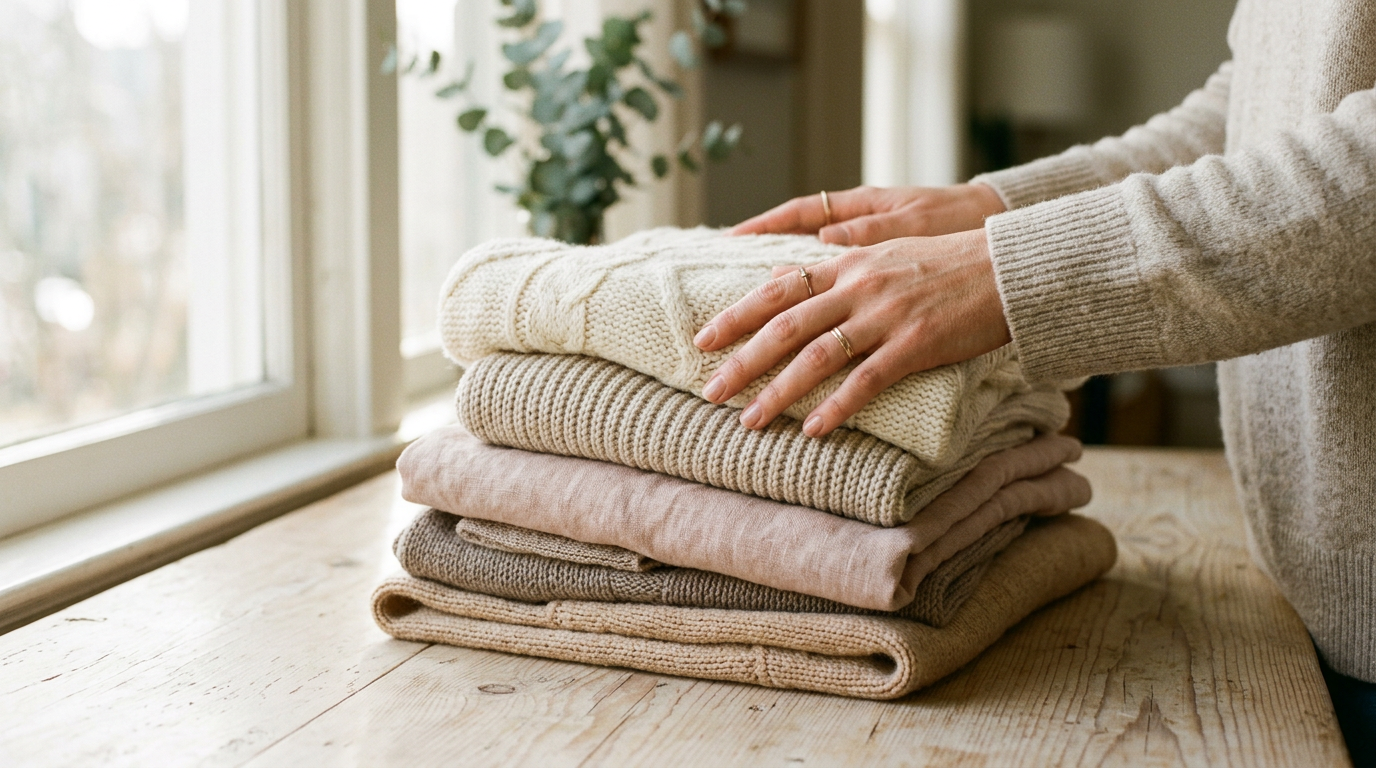
Tag: wardrobe basics

  • How to Read a Fabric Label Like You Mean It

    How to Read a Fabric Label Like You Mean It

    Everyone checks the brand name. Almost no one reads the tag sewn into the side seam, and that’s the one that tells you whether you’ll still be wearing the piece in two years.

    Fiber content is not the whole story, but it’s a solid first read. Here’s how to decode it, fiber by fiber, so your next fit check starts before you even try something on.

    Start with the order

    Fibers are listed from most to least. A tag that reads 80% cotton, 20% polyester is mostly a cotton story. One that reads 15% wool, 85% acrylic is mostly an acrylic story with a wool cameo. Read the first line, then look at what’s supporting it.

    Also check the care instructions. “Dry clean only” on a piece you plan to wear weekly is a lifestyle decision. Make it on purpose.

    Wool: warm, bouncy, forgiving

    Wool fibers have natural crimp, which traps air. That’s why wool is warm without being heavy, and why it bounces back from wrinkles instead of holding onto them. It drapes with some body, so it looks structured without being stiff.

    The catch is texture. Finer wools like merino feel soft against skin. Coarser wools can itch, especially at the neck and wrists. Wool also pills, mostly in high-friction zones like underarms and where a bag strap sits. That’s normal and fixable with a fabric shaver. A good wool piece pills lightly at first, then settles down.

    Cotton: easy, breathable, depends on the weave

    Cotton is the everyday fiber. It breathes, it’s comfortable, and it washes well. How it behaves depends on the yarn and the weave. Tightly woven poplin holds a crisp line. A loose jersey slouches. Longer fibers, often labeled things like Pima or Supima, make smoother, stronger yarn that resists pilling better than short-fiber cotton.

    Cotton wrinkles, though less dramatically than linen. It can also shrink and fade over time. Pre-washed or garment-dyed cotton has already done some of that for you.

    Linen: the wrinkle is the point

    Linen is cool, dry, and a little crisp. It gets softer every time you wash it, and it wrinkles almost on contact. If you want a pressed look, linen will fight you. If you like a lived-in, slightly undone vibe, it’s perfect.

    Pure linen can feel stiff when new, and a loose weave can be see-through in light colors. A linen-cotton blend is a good middle ground: you keep the airy hand with fewer creases and a softer start.

    Viscose: beautiful drape, needs a little respect

    Viscose, which US labels often list as rayon, is made from plant cellulose. It’s the reason a slip skirt moves like liquid. It’s smooth, lightweight, and comfortable in heat.

    It’s also weaker when wet. Aggressive washing can stretch it, warp it, or shrink it. It wrinkles easily too, and it can lose shape at the elbows and seat if it’s cut too fine. Modal and lyocell are relatives with similar softness and, generally, better wash behavior. For viscose, follow the care tag exactly.

    Blends: read the job each fiber is doing

    Blends aren’t automatically a downgrade. They’re fibers with assigned roles.

    • Elastane or spandex (a small amount): adds stretch and recovery, so knees and seats don’t bag out.
    • Nylon: adds strength, especially in knits that get a lot of wear.
    • Polyester: adds wrinkle resistance and shape retention, but it doesn’t breathe like natural fibers, and it can pill and hold odor.
    • Wool with synthetics: can add durability, but if wool is a minor share, you won’t get wool’s warmth or feel.

    The question to ask: what is each fiber doing here? If you can answer that, the blend is working for you. If one is just there to lower the cost, you’ll feel it by the third wear.

    What to check in hand

    The tag gets you halfway. Texture finishes the job. When a piece arrives, or when you’re touching it anywhere, run through this before you cut tags:

    • Crumple it. Squeeze a corner in your fist for five seconds, then let go. Does it spring back, soften, or stay creased?
    • Hold it to the light. You’re checking density. If it’s see-through in a color you planned to wear without layers, you’ll know now.
    • Rub it against itself. Fabric on fabric previews pilling. If it fuzzes in a few passes, it will on your arms too.
    • Drape it over your hand. Does it fall in soft folds, or stand off like cardboard? That’s the silhouette you’re buying.
    • Pull gently at a seam. Gaps or stressed threads mean it won’t make it through a season of real life.
    • Check the inside. Clean seams and finished edges tell you how much care went into the rest.

    Texture over label

    A famous name sewn into the collar means nothing if the fabric underneath pills, sags, or itches. A piece with no recognizable name and a dense, well-finished fabric will look better on the fortieth wear than the hyped one on the fourth.

    That’s the whole idea behind how we edit: better fabric, better fit, better mood. Reading the tag is the quickest way to start doing it yourself.

    So next time something catches your eye, flip it over before you fall for it. The tag won’t tell you everything, but it will tell you where to look.
  • The 12-Piece Capsule: How to Edit Your Closet Without Feeling Like You Gave Things Up

    The 12-Piece Capsule: How to Edit Your Closet Without Feeling Like You Gave Things Up

    A capsule closet has a reputation problem. It sounds like a rule someone else made up: twelve pieces, one beige palette, zero fun. That’s not what we’re doing here.

    Think of it as a fit check for your entire closet. The goal is to wear more of what you already love and buy less of what you don’t. Nobody is confiscating your favorite jeans.

    One ground rule: twelve is a starting number, not a law. Shoes, bags, and jewelry sit outside it. We’re counting clothes only.

    Step 1: Pick a color lane

    Your lane is a small set of colors that all get along. It isn’t a uniform. It’s a home base.

    To find yours, scroll back through your last handful of OOTDs or saved fit pics. Whatever keeps showing up is your lane, whether or not you’d call it a “style.” Most lanes come down to:

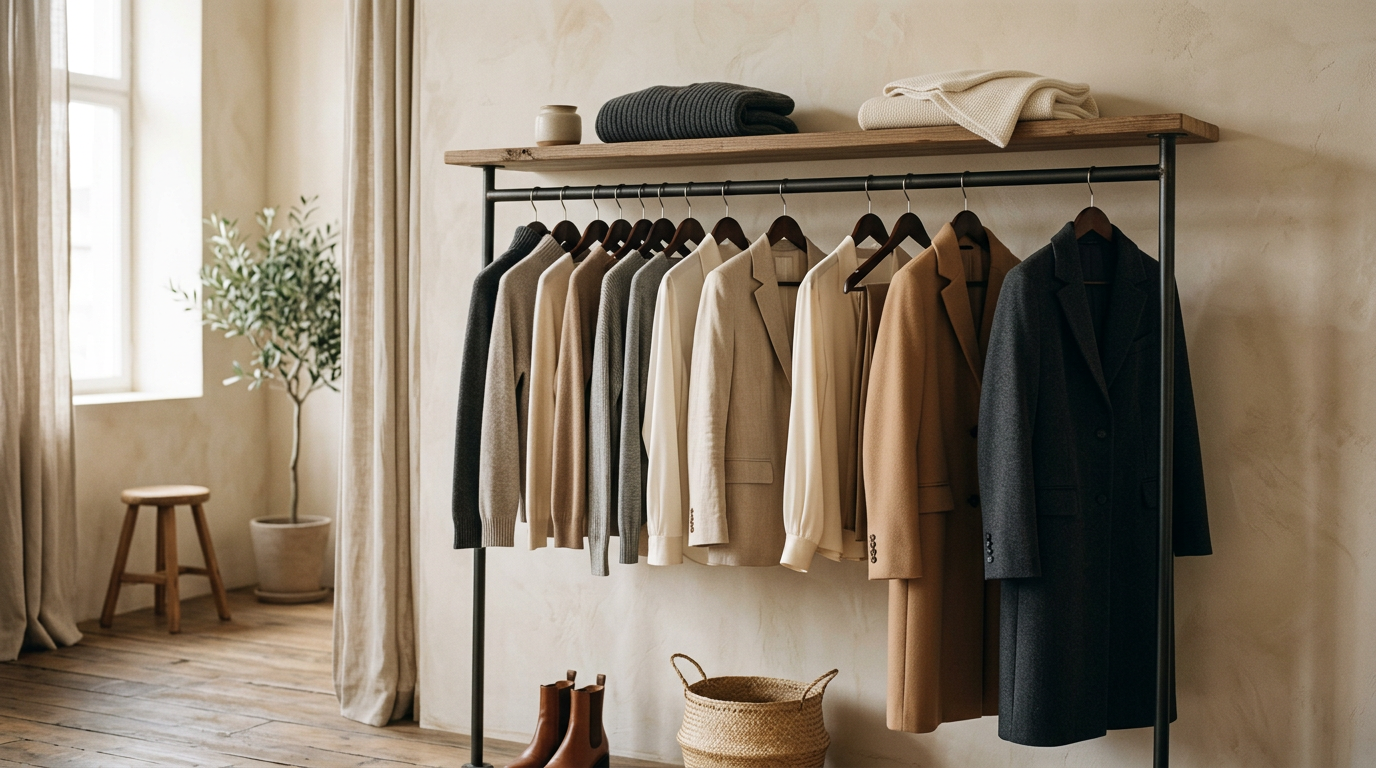
    Two base neutrals that work together, like cream and charcoal, or camel and black. One in-between, like denim or olive. One accent that gives it personality, like dusty pink or rust.

    Every piece in the capsule should work with at least two others. That’s the whole test.

    And a lane doesn’t mean boring. Texture does the heavy lifting. A ribbed knit, a crisp poplin, and a heavy wool coat can share a palette and still read as three completely different moods.

    Step 2: Decide where the weight goes

    Not every category deserves equal space. Some pieces carry the capsule, and some are supporting cast. Here’s a split to start from:

    • Tops (3): Your workhorses. Think a clean tee, a crisp button-up, and one that feels a little more interesting.
    • Bottoms (3): Each one should work with every top. That’s what makes three bottoms and three tops into nine outfits.
    • Outerwear (2): One for most days, one with more attitude. This is what people see first.
    • Knitwear (2): One you’d live in, one you’d dress up.
    • Wildcards (2): A dress, a statement piece, or anything that’s your lewk on its own.

    Adjust it to your actual life. If you walk everywhere and layer year-round, give outerwear another slot. If you’re in an office or studio most days, lean harder on tops and bottoms.

    Put your best thinking into outerwear and knitwear. They’re visible, they get rewarn constantly, and fabric makes or breaks them. This is where texture and fit matter most.

    Step 3: Run the keep, maybe, let-go test

    Now the part everyone dreads. Go category by category, not the whole closet at once, because that’s how a Saturday disappears. Pick up each piece and decide.

    Keep. You’d wear it this week. It fits you now, not the version of you from two years ago or the one you’re planning to be. It sits comfortably in your lane. If you reach for it without thinking, it’s a keep.

    Maybe. You like it, but something’s off. Maybe the fit is close but not right, the color fights your lane, or you love it and have nowhere to wear it. Put every maybe in one bag or bin and write a date on it, a month or two out. If you haven’t gone digging for something by then, you have your answer.

    Let-go. It was bought for a version of you who didn’t show up. It needs a repair you’ve been avoiding for a year. It only works with one other thing. Or you feel guilty looking at it. Guilt isn’t a reason to keep anything.

    Let-go doesn’t have to mean landfill. Resell it, swap it with a friend, donate it, or finally take it to a tailor if it’s one fix away from a keep.

    Step 4: Count your keeps and name the gaps

    Lay your keeps out against the split above. You’ll probably find you’re over in one category (hello, fourteen black tops) and missing something in another.

    Write the gaps down. Don’t go buy them all at once. The point of an edit is that every piece earns its spot, and that takes a little patience.

    You already screenshot outfits from half a dozen accounts before buying anything, so use that habit. Look at your saves and see what keeps repeating: a particular coat shape, a certain trouser length, a knit that looks heavy and drapey. Then fill the one gap that would unlock the most outfits first.

    When you do buy, think about how it feels, not just how it photographs. Check the fabric, the weight, and how it moves. A piece you’ll wear forty times should feel good on the fortieth.

    Step 5: Fit check the whole thing

    Here’s how you know it works. Pick three outfits from your twelve and try them on. Take a photo of each, no filter and no overthinking.

    If you can build all three without reaching outside the capsule, you’re done. If you got stuck, that’s useful information. Note what was missing, and that’s your next buy.

    Expect to tweak it with the seasons. The capsule isn’t a permanent edit. Swap a knit for a lighter layer, move a coat to the back, bring your accent color forward. The framework stays, and the pieces rotate.

    Done right, you’ll feel less like you gave things up and more like you can finally see what you have. Getting dressed gets faster, and the pieces you kept get worn more.

    The edit is everything. Start with one category this weekend and see how it feels.