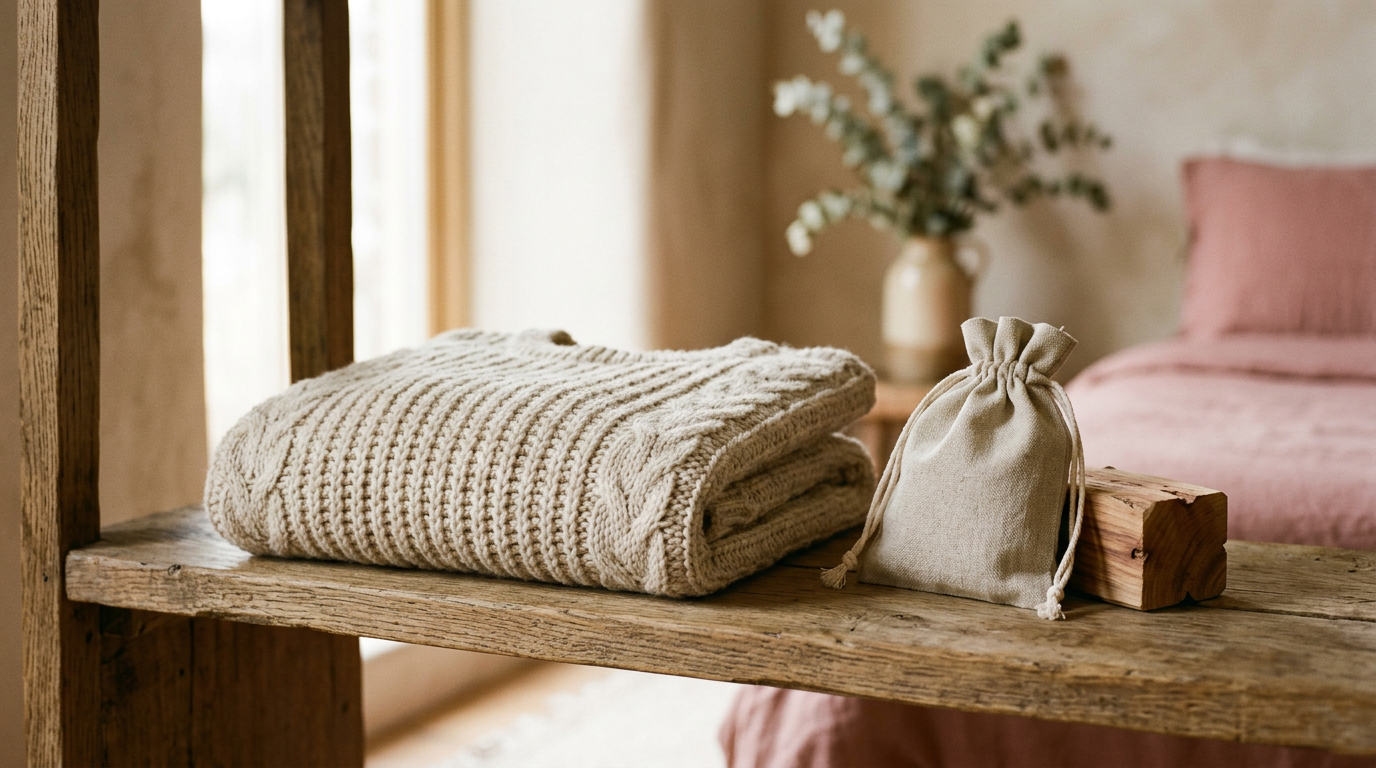
Tag: knitwear

  • How to Make a Great Sweater Last Past Season Three

    How to Make a Great Sweater Last Past Season Three

    Season one, the sweater is the whole lewk. Season two, it’s the one you grab without thinking. Season three is where most knits quietly fall apart: stretched cuffs, a fuzzy front, a tiny hole you swear wasn’t there in March.

    It doesn’t have to go that way. A good sweater is built to be worn a lot, and it’ll keep going if you give it a little attention. None of this is precious. It’s a few habits, and most of them involve doing less.

    Air it first, wash it later

    Wool and other natural fibers don’t need washing after every wear. Unless you’ve spilled something or sweated through it, hang the sweater over a chair back or lay it flat near an open window for a few hours. Fresh air does most of the work.

    Washing is the harshest thing a knit goes through. Water, agitation and heat are what cause stretching, shrinking and felting. Wash it when it actually needs it, not on a schedule.

    Spot-clean small marks with a damp cloth and a drop of gentle soap. Dab, don’t rub.

    When it does need a wash

    Read the care label first. It outranks everything here, and some knits really are dry-clean only.

    If the label allows hand washing, that’s the gentlest route:

    • Fill a basin with cool water and a small amount of detergent made for wool or delicates.
    • Turn the sweater inside out and press it under the water. Let it soak for a few minutes.
    • Swish lightly, then drain and rinse with water of the same temperature. Sudden temperature swings are not your friend.
    • Press the water out against the side of the basin. Never wring or twist.

    If you use a machine, choose the wool or delicate cycle, cold water, and a mesh bag. Skip fabric softener, which coats fibers and does nothing helpful for knits.

    Dry it flat, every time

    A wet knit is heavy, and heavy things stretch. Hanging a wet sweater, or tossing it in the dryer, is the fastest way to warp the shoulders and shrink the body.

    Lay a clean towel flat, set the sweater on it, and roll the two up together to soak out moisture. Then unroll and move the sweater onto a dry towel or a drying rack. Gently shape the sleeves, hem and neckline back to their original proportions, and let it dry away from direct sun and radiators. It can take a day or longer for a thick knit, so don’t rush it.

    De-pilling is maintenance, not a verdict

    Pills are tiny balls of fiber that form where the sweater rubs against bags, seat belts, or its own sleeves. They show up on well-made knits too, especially in the first few wears. They don’t mean the piece was a bad buy.

    Don’t pick at them with your fingers, because pulling can tug the knit out of shape. Lay the sweater flat on a table and use a fabric comb or a fabric shaver, with very light pressure and short strokes. Go slowly, check as you go, and stop when the surface looks clean. A shaver pressed too hard can thin the fabric, so keep it light.

    Do this a few times a season and the pilling usually slows down as the loose fibers work their way off.

    Fold it, don’t hang it

    Hangers pull on the shoulders over time, and those little bumps are very hard to undo. Knits belong folded in a drawer or on a shelf.

    Fold it in thirds, sleeves tucked across the body, and don’t stack so many that the bottom ones get crushed. If a drawer is packed so tight you have to wrestle things out, that’s a sign it’s time for an edit.

    Moths: boring prevention beats panic

    Moth larvae eat natural fibers like wool and cashmere, and they’re drawn to anything with body oils, food or sweat on it. That’s why clean storage matters more than any scent in the drawer.

    A simple end-of-season routine covers most of it:

    • Wash or air every knit before it goes away for months. Don’t store anything that’s been worn and not cleaned.
    • Make sure each sweater is completely dry.
    • Store in a breathable cotton bag or a sealed container, not loose on an open shelf.
    • Add cedar blocks or lavender sachets if you like. They can help deter moths, but they won’t fix a dirty sweater, and cedar needs a light sanding now and then to refresh the scent.
    • Check seams, cuffs and folds every few weeks.

    If you spot small holes, silky webbing or tiny larvae, act quickly. Seal the affected pieces in a bag and put them in the freezer for several days, then wash or clean as the label allows. Vacuum the drawer or shelf and wipe it down before anything goes back in. If it keeps happening, call a pest professional.

    The point of all this

    None of it takes long. A little airing, a gentle wash a couple of times a year, a comb when it needs one, a proper fold. That’s the whole routine.

    It’s also the quiet argument for buying fewer, better things. A well-made knit with better fabric and a better fit has a long second act, as long as you treat it like it’s worth keeping. The piece you’ve worn forty times and still get asked about has usually been looked after. That’s the edit.

  • Transitional Weather Dressing: Layers for When the Forecast Can’t Decide

    Transitional Weather Dressing: Layers for When the Forecast Can’t Decide

    It’s 48 degrees at 8 a.m., sunny and warm by lunch, and windy again by the time you leave. The forecast has not made a decision, so you have to.

    The good news is that between-seasons dressing isn’t about owning more. It’s about knowing what each layer is doing, and choosing fabrics by weight instead of by what the calendar says.

    Start with weight, not season

    Most of us sort clothes into “winter” and “summer” and then panic in the gap. A better sort is light, medium, and heavy.

    Light is anything you can feel the air through: fine cotton, poplin, thin jersey, silky weaves. Medium has some body but still drapes, like a mid-weight merino, a brushed cotton, or a twill. Heavy is what you’d need a real cold snap to justify. For in-between weather, you’re building almost entirely from light and medium, with one piece of each doing a clear job.

    Lightweight outerwear: what to look for

    The in-between coat should block wind and shrug off a drizzle without making you sweat on the train. Look for a tightly woven cotton, a cotton-blend gabardine, or a technical-feeling fabric with a smooth hand. Tight weave is the point. It cuts the wind without adding bulk.

    Pay attention to lining, too. A coat that’s unlined or only half-lined gives you range. Fully lined and padded is a winter coat in disguise.

    On shape, go for something that sits over a knit without straining across the shoulders. Try it on with your thickest sweater and your thinnest tee. If it works with both, it earns its place.

    The knit that works under and over

    This is the hardest-working piece in the whole system. You want a fine- to mid-gauge knit in a fiber that breathes. Merino and cotton blends are both good here, and cashmere blends work if that’s your budget. It should be soft enough to wear against skin and structured enough to sit on top of a collared shirt.

    A few things make a knit flexible:

    • A neckline that plays both roles. A crew or a slim V works under a shirt and alone. A chunky turtleneck only works one way.
    • A hem that doesn’t bunch. If it rides up under a coat, you’ll be tugging at it all day.
    • A neutral that pairs with everything else you own. Oatmeal, charcoal, soft gray, and cream all disappear into other outfits, which is what you want.

    Wear it under a blazer or open shirt for the cold start. Tie it around your shoulders or drape it over a bag when the sun comes out. Same knit, three different lewks.

    The rule of one removable layer

    Here’s the whole system in a sentence: every outfit gets exactly one layer you can take off and carry without it becoming a problem.

    One, not three. Three removable layers means you’re hauling a second outfit around, and your tote starts to look like a gym bag. One means you’re prepared without looking like you hedged.

    The removable layer should be the lightest thing that still does something. A jacket that folds over your arm, a cardigan that slides into a bag, an overshirt you can knot at the waist. Everything else in the outfit should look finished without it.

    Quick test before you leave: take the layer off in the mirror. If the outfit still looks intentional, you’re set. If it suddenly looks like you forgot something, rethink the base.

    Three formulas to adapt

    These are templates, not prescriptions. Swap in whatever you own that matches the weight and the job.

    1. The Clean Base. Light tee or fine-knit tank, straight-leg trousers in a mid-weight fabric, a lightweight coat as your removable layer. Finish with a flat or low boot. This is the one for days that start cold and end mild, and the coat comes off without a single styling decision.
    2. The Knit Sandwich. Poplin shirt, then your versatile knit over it, then a shorter, lighter jacket on top. The knit is the middle layer, so it’s what you keep when the jacket goes. Pair with a midi skirt or relaxed denim. Roll the shirt cuffs over the knit sleeves for a bit of texture.
    3. The One-and-Done Dress. A mid-weight dress in a fabric with some drape, a fine knit worn open over it, and a scarf in a light weave as your removable piece. Add tights or bare legs depending on the day. The scarf handles the temperature swing around your neck, which is where you feel it most.

    A few finishing notes

    Shoes matter more than you’d think. In between seasons, you want something that handles a wet sidewalk and a warm afternoon. Leather boots with a clean sole or a structured loafer do both.

    Keep your palette tight. When you’re layering, three colors that already like each other will always look more deliberate than five you’re hoping will work. Do a quick fit check in natural light before you head out, because layered outfits can look different by a window than they do under a bathroom bulb.

    And remember the point of The Edit: fewer pieces, chosen well, worn hard. A light coat, a knit that moves between roles, and one layer you can lose. That’s most of the problem solved, and the forecast can do whatever it wants.