Category: Fabric & Fit

  • How to Make a Great Sweater Last Past Season Three

    How to Make a Great Sweater Last Past Season Three

    Season one, the sweater is the whole lewk. Season two, it’s the one you grab without thinking. Season three is where most knits quietly fall apart: stretched cuffs, a fuzzy front, a tiny hole you swear wasn’t there in March.

    It doesn’t have to go that way. A good sweater is built to be worn a lot, and it’ll keep going if you give it a little attention. None of this is precious. It’s a few habits, and most of them involve doing less.

    Air it first, wash it later

    Wool and other natural fibers don’t need washing after every wear. Unless you’ve spilled something or sweated through it, hang the sweater over a chair back or lay it flat near an open window for a few hours. Fresh air does most of the work.

    Washing is the harshest thing a knit goes through. Water, agitation and heat are what cause stretching, shrinking and felting. Wash it when it actually needs it, not on a schedule.

    Spot-clean small marks with a damp cloth and a drop of gentle soap. Dab, don’t rub.

    When it does need a wash

    Read the care label first. It outranks everything here, and some knits really are dry-clean only.

    If the label allows hand washing, that’s the gentlest route:

    • Fill a basin with cool water and a small amount of detergent made for wool or delicates.
    • Turn the sweater inside out and press it under the water. Let it soak for a few minutes.
    • Swish lightly, then drain and rinse with water of the same temperature. Sudden temperature swings are not your friend.
    • Press the water out against the side of the basin. Never wring or twist.

    If you use a machine, choose the wool or delicate cycle, cold water, and a mesh bag. Skip fabric softener, which coats fibers and does nothing helpful for knits.

    Dry it flat, every time

    A wet knit is heavy, and heavy things stretch. Hanging a wet sweater, or tossing it in the dryer, is the fastest way to warp the shoulders and shrink the body.

    Lay a clean towel flat, set the sweater on it, and roll the two up together to soak out moisture. Then unroll and move the sweater onto a dry towel or a drying rack. Gently shape the sleeves, hem and neckline back to their original proportions, and let it dry away from direct sun and radiators. It can take a day or longer for a thick knit, so don’t rush it.

    De-pilling is maintenance, not a verdict

    Pills are tiny balls of fiber that form where the sweater rubs against bags, seat belts, or its own sleeves. They show up on well-made knits too, especially in the first few wears. They don’t mean the piece was a bad buy.

    Don’t pick at them with your fingers, because pulling can tug the knit out of shape. Lay the sweater flat on a table and use a fabric comb or a fabric shaver, with very light pressure and short strokes. Go slowly, check as you go, and stop when the surface looks clean. A shaver pressed too hard can thin the fabric, so keep it light.

    Do this a few times a season and the pilling usually slows down as the loose fibers work their way off.

    Fold it, don’t hang it

    Hangers pull on the shoulders over time, and those little bumps are very hard to undo. Knits belong folded in a drawer or on a shelf.

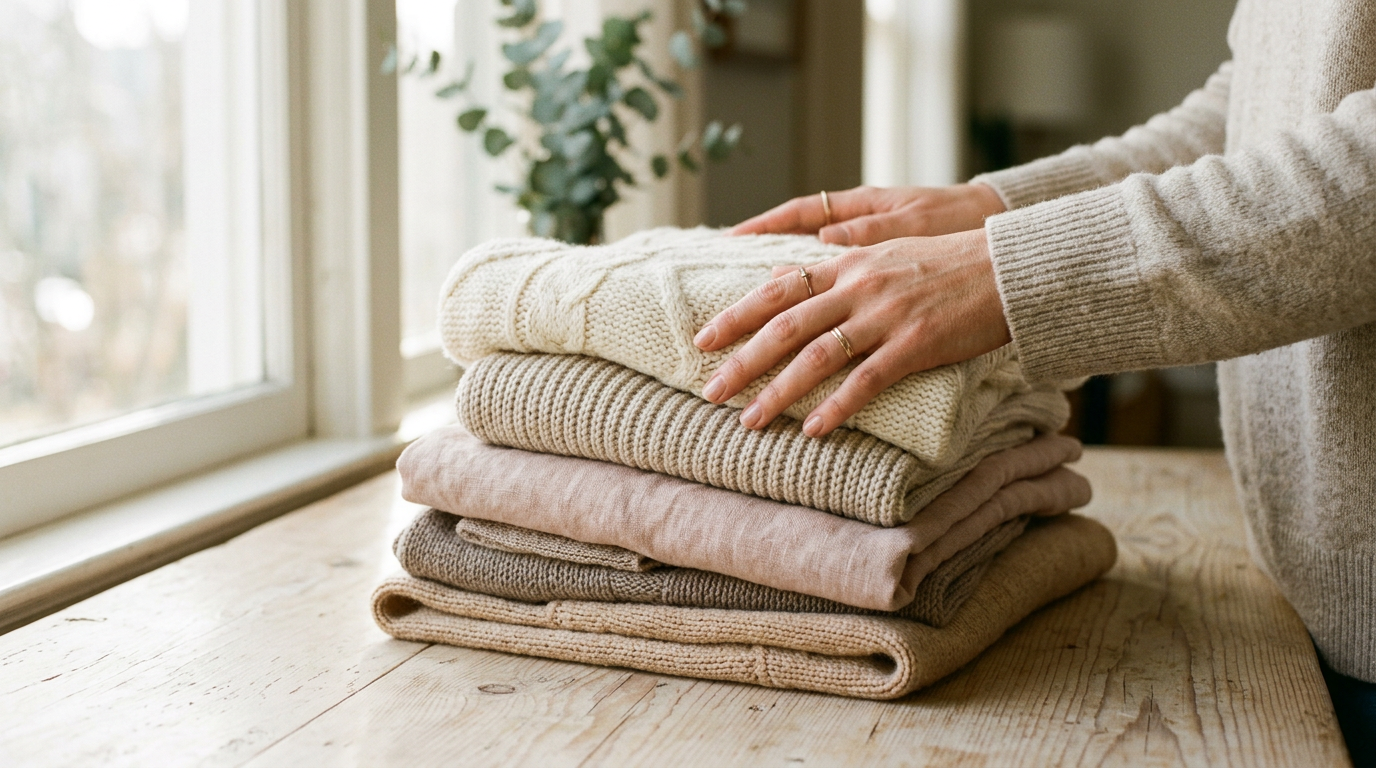
    Fold it in thirds, sleeves tucked across the body, and don’t stack so many that the bottom ones get crushed. If a drawer is packed so tight you have to wrestle things out, that’s a sign it’s time for an edit.

    Moths: boring prevention beats panic

    Moth larvae eat natural fibers like wool and cashmere, and they’re drawn to anything with body oils, food or sweat on it. That’s why clean storage matters more than any scent in the drawer.

    A simple end-of-season routine covers most of it:

    • Wash or air every knit before it goes away for months. Don’t store anything that’s been worn and not cleaned.
    • Make sure each sweater is completely dry.
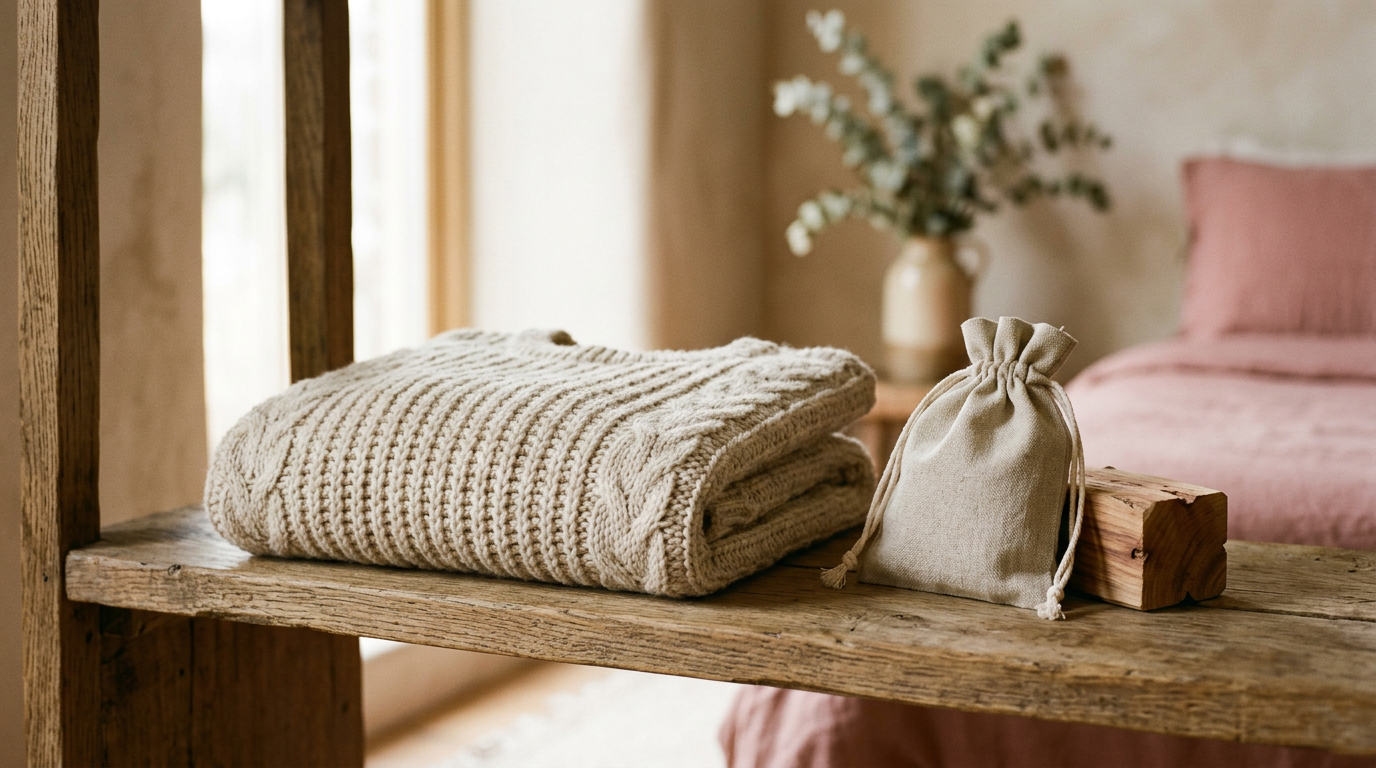
    • Store in a breathable cotton bag or a sealed container, not loose on an open shelf.
    • Add cedar blocks or lavender sachets if you like. They can help deter moths, but they won’t fix a dirty sweater, and cedar needs a light sanding now and then to refresh the scent.
    • Check seams, cuffs and folds every few weeks.

    If you spot small holes, silky webbing or tiny larvae, act quickly. Seal the affected pieces in a bag and put them in the freezer for several days, then wash or clean as the label allows. Vacuum the drawer or shelf and wipe it down before anything goes back in. If it keeps happening, call a pest professional.

    The point of all this

    None of it takes long. A little airing, a gentle wash a couple of times a year, a comb when it needs one, a proper fold. That’s the whole routine.

    It’s also the quiet argument for buying fewer, better things. A well-made knit with better fabric and a better fit has a long second act, as long as you treat it like it’s worth keeping. The piece you’ve worn forty times and still get asked about has usually been looked after. That’s the edit.
  • How to Read a Fabric Label Like You Mean It

    How to Read a Fabric Label Like You Mean It

    Everyone checks the brand name. Almost no one reads the tag sewn into the side seam, and that’s the one that tells you whether you’ll still be wearing the piece in two years.

    Fiber content is not the whole story, but it’s a solid first read. Here’s how to decode it, fiber by fiber, so your next fit check starts before you even try something on.

    Start with the order

    Fibers are listed from most to least. A tag that reads 80% cotton, 20% polyester is mostly a cotton story. One that reads 15% wool, 85% acrylic is mostly an acrylic story with a wool cameo. Read the first line, then look at what’s supporting it.

    Also check the care instructions. “Dry clean only” on a piece you plan to wear weekly is a lifestyle decision. Make it on purpose.

    Wool: warm, bouncy, forgiving

    Wool fibers have natural crimp, which traps air. That’s why wool is warm without being heavy, and why it bounces back from wrinkles instead of holding onto them. It drapes with some body, so it looks structured without being stiff.

    The catch is texture. Finer wools like merino feel soft against skin. Coarser wools can itch, especially at the neck and wrists. Wool also pills, mostly in high-friction zones like underarms and where a bag strap sits. That’s normal and fixable with a fabric shaver. A good wool piece pills lightly at first, then settles down.

    Cotton: easy, breathable, depends on the weave

    Cotton is the everyday fiber. It breathes, it’s comfortable, and it washes well. How it behaves depends on the yarn and the weave. Tightly woven poplin holds a crisp line. A loose jersey slouches. Longer fibers, often labeled things like Pima or Supima, make smoother, stronger yarn that resists pilling better than short-fiber cotton.

    Cotton wrinkles, though less dramatically than linen. It can also shrink and fade over time. Pre-washed or garment-dyed cotton has already done some of that for you.

    Linen: the wrinkle is the point

    Linen is cool, dry, and a little crisp. It gets softer every time you wash it, and it wrinkles almost on contact. If you want a pressed look, linen will fight you. If you like a lived-in, slightly undone vibe, it’s perfect.

    Pure linen can feel stiff when new, and a loose weave can be see-through in light colors. A linen-cotton blend is a good middle ground: you keep the airy hand with fewer creases and a softer start.

    Viscose: beautiful drape, needs a little respect

    Viscose, which US labels often list as rayon, is made from plant cellulose. It’s the reason a slip skirt moves like liquid. It’s smooth, lightweight, and comfortable in heat.

    It’s also weaker when wet. Aggressive washing can stretch it, warp it, or shrink it. It wrinkles easily too, and it can lose shape at the elbows and seat if it’s cut too fine. Modal and lyocell are relatives with similar softness and, generally, better wash behavior. For viscose, follow the care tag exactly.

    Blends: read the job each fiber is doing

    Blends aren’t automatically a downgrade. They’re fibers with assigned roles.

    • Elastane or spandex (a small amount): adds stretch and recovery, so knees and seats don’t bag out.
    • Nylon: adds strength, especially in knits that get a lot of wear.
    • Polyester: adds wrinkle resistance and shape retention, but it doesn’t breathe like natural fibers, and it can pill and hold odor.
    • Wool with synthetics: can add durability, but if wool is a minor share, you won’t get wool’s warmth or feel.

    The question to ask: what is each fiber doing here? If you can answer that, the blend is working for you. If one is just there to lower the cost, you’ll feel it by the third wear.

    What to check in hand

    The tag gets you halfway. Texture finishes the job. When a piece arrives, or when you’re touching it anywhere, run through this before you cut tags:

    • Crumple it. Squeeze a corner in your fist for five seconds, then let go. Does it spring back, soften, or stay creased?
    • Hold it to the light. You’re checking density. If it’s see-through in a color you planned to wear without layers, you’ll know now.
    • Rub it against itself. Fabric on fabric previews pilling. If it fuzzes in a few passes, it will on your arms too.
    • Drape it over your hand. Does it fall in soft folds, or stand off like cardboard? That’s the silhouette you’re buying.
    • Pull gently at a seam. Gaps or stressed threads mean it won’t make it through a season of real life.
    • Check the inside. Clean seams and finished edges tell you how much care went into the rest.

    Texture over label

    A famous name sewn into the collar means nothing if the fabric underneath pills, sags, or itches. A piece with no recognizable name and a dense, well-finished fabric will look better on the fortieth wear than the hyped one on the fourth.

    That’s the whole idea behind how we edit: better fabric, better fit, better mood. Reading the tag is the quickest way to start doing it yourself.

    So next time something catches your eye, flip it over before you fall for it. The tag won’t tell you everything, but it will tell you where to look.